Tax deed deals can move quickly. For investors, that speed can create opportunity. However, it can also create pressure.
A short review window does not remove the need for careful checks. In fact, it makes due diligence even more important.
At 50 East LLC, we review tax deed and distressed property opportunities for investors who understand both sides of the process. Speed matters because opportunities can pass quickly. Due diligence matters because not every deal is worth pursuing.
When a suitable opportunity is available, the investor does not purchase the property from 50 East LLC. Instead, once the investor provides their information, 50 East LLC sends the actual state notice. The investor can then review the details, complete their own due diligence, and purchase directly from the state.
Why tax deed deals can move quickly
Tax deed opportunities do not always follow the same timeline as normal property listings.
A traditional buyer may have time to view a home, compare finance options, negotiate terms, and complete a standard closing process. Tax deed opportunities can work differently.
In some cases, investors need to review the opportunity, check the key details, and make a decision within a short window. Because of that, serious investors need a clear process before an opportunity appears.
They should already know what they can buy, what level of risk they accept, and which checks they need to complete first.
How the state notice and purchase process works
50 East LLC identifies and reviews selected tax deed and distressed property opportunities.
When an investor provides their information and the opportunity appears suitable, 50 East LLC sends the actual state notice connected to that opportunity. This allows the investor to review the notice, check the details, and decide whether they want to move forward.
If the investor chooses to proceed, enquiries submitted through the Buy Now form are sent directly to The Copeland Law Office, LLC. The Copeland Law Office, LLC oversees the transaction and handles all purchase payments.
This process keeps the investor’s review clear and structured. The investor should review the notice carefully, check the property information, seek legal guidance where needed, and make their own decision before acting.
Speed can help, but it should not replace judgement
Moving quickly can help investors respond to a time-sensitive opportunity. However, speed without judgement can lead to poor decisions.
A low quote price does not make a property a good deal on its own. The investor still needs to understand the title position, possible redemption rights, unpaid costs, property condition, access, zoning, and likely exit route.
That is why experienced investors do not only ask, “How much is it?”
They also ask:
- What does the state notice say?
- What do we know about the property?
- What do we still need to check?
- What could affect resale or development?
- What legal steps may be needed?
- What costs could reduce the spread?
- Does this fit the investor’s strategy?
Those questions help turn a fast decision into a controlled decision.
What investors should check first
When time is limited, investors need to focus on the checks that matter most.
The first step is to review the state notice and confirm the basic property details. That may include the parcel information, location, lot size, current use, quoted amount, and any available public record information.
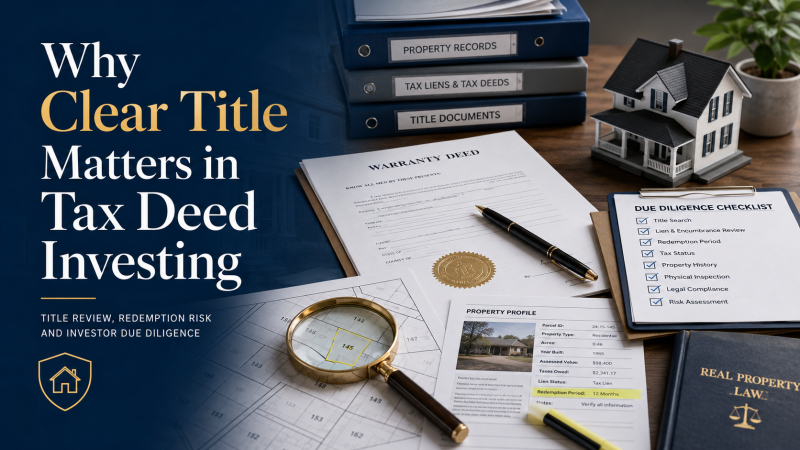
Next, investors should think about title and redemption risk. Tax deed property can involve legal issues that differ from a normal purchase. Therefore, buyers should speak with a qualified attorney when they need legal guidance.
After that, investors should review practical issues. Access, road frontage, utilities, zoning, environmental concerns, local rules, and property condition can all affect the value of the opportunity.
Finally, investors should check their exit plan. A property may look attractive at the quote price, but the deal still needs a realistic route to resale, development, rental use, land holding, or another investment outcome.
Due diligence protects the investor’s decision
Due diligence does not guarantee a result. However, it gives the investor a better basis for making a decision.
A disciplined review can help investors avoid deals with unclear access, unrealistic value assumptions, heavy legal work, poor resale demand, or extra costs that reduce the opportunity.
It can also help investors act faster when the right deal appears. If the investor already has a clear review process, they do not need to start from scratch every time.
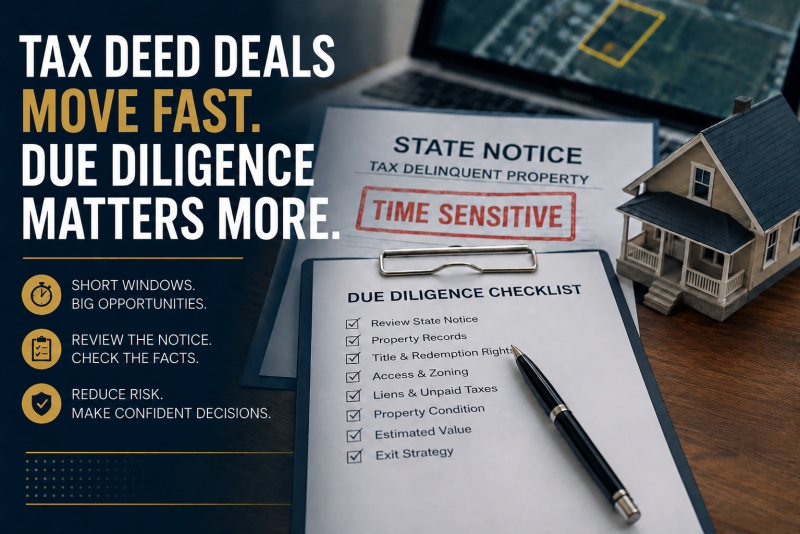
That process may include:
- Reviewing the state notice
- Checking public property records
- Confirming parcel and tax information
- Looking at maps and access points
- Considering title and redemption issues
- Estimating legal and holding costs
- Checking zoning and possible use
- Reviewing nearby sales where possible
- Confirming whether the opportunity fits the strategy
This approach keeps the decision practical.
Why qualified investors need a process
Not every investor is suited to tax deed opportunities.
These deals often suit investors who can review information quickly, understand distressed property risk, and make informed decisions without needing a long retail buying process.
Cash buyers, developers, land buyers, wholesalers, builders, and experienced real estate investors may be better suited to this type of opportunity. Even then, each investor needs to decide whether the deal fits their own risk level and plan.
A clear process helps serious investors move with confidence. It also helps them walk away when the details do not support the deal.
How 50 East LLC supports the review process
50 East LLC reviews selected tax deed and distressed property opportunities before sharing state notice details with qualified investors.
We look at the basic opportunity, timing, property details, estimated value range, quoted amount, and whether the opportunity may suit an investor who understands the risks involved.
However, each investor must complete their own review before acting. That may include title research, legal advice, valuation checks, property research, tax checks, and a clear plan for what happens after purchase.
The goal is not to make every opportunity look attractive. The goal is to help qualified investors access relevant state notice opportunities and review them with the right level of speed and discipline.
FAQs About Fast Tax Deed Decisions
Why do tax deed deals need fast decisions?
Tax deed opportunities can have short review or payment windows. Because of that, investors may need to review the state notice, check the key details, and decide whether the opportunity fits their strategy.
Does 50 East LLC handle the property purchase or payments?
No. 50 East LLC identifies and reviews selected opportunities, then provides the actual state notice for the investor to review. If the investor chooses to proceed, enquiries submitted through the Buy Now form are sent directly to The Copeland Law Office, LLC. The Copeland Law Office, LLC oversees the transaction and handles all purchase payments.
Does 50 East LLC sell the property to the investor?
No. When an investor provides their information and the opportunity appears suitable, 50 East LLC sends the actual state notice. The investor then reviews the details and purchases directly from the state if they choose to move forward.
Should investors rush into tax deed deals?
No. Speed matters, but investors should still complete due diligence before acting. A fast decision should still include checks on the state notice, title matters, redemption risk, access, property condition, taxes, zoning, costs, and exit strategy.
What is the biggest risk with fast-moving tax deed opportunities?
One major risk is making a decision based only on the quote price or estimated value. Investors should review the full picture before moving forward, including legal, practical, and resale considerations.
Who is best suited to fast tax deed opportunities?
These opportunities often suit experienced investors, cash buyers, builders, developers, land buyers, wholesalers, and real estate professionals who understand distressed property risk and can complete their own review quickly.
How does due diligence help investors move faster?
A clear due diligence process helps investors know what to check first. As a result, they can review opportunities faster without ignoring key risks.
Final thought
Tax deed deals can reward preparation.
The opportunity window may be short, but the decision still needs discipline. Investors who understand the process can move quickly, ask better questions, and avoid acting on headline numbers alone.
If you can review distressed property opportunities quickly and complete your own due diligence, request tax deed opportunity updates from 50 East LLC. When you choose to proceed through the Buy Now form, your enquiry will be sent directly to The Copeland Law Office, LLC for transaction oversight and purchase payment handling.