Buying a tax deed property can look simple at first. The quote price may seem attractive, and the opportunity window may be short.
However, investors should never judge a tax deed opportunity on price alone.
A careful review can help investors understand the property, the risks, the likely costs, and the next steps before they decide whether to move forward.
At 50 East LLC, we identify and review selected tax deed and distressed property opportunities. When an investor provides their information and the opportunity appears suitable, we send the actual state notice for review.
If the investor chooses to proceed through the Buy Now form, the enquiry goes directly to The Copeland Law Office, LLC. The Copeland Law Office, LLC oversees the transaction and handles all purchase payments.
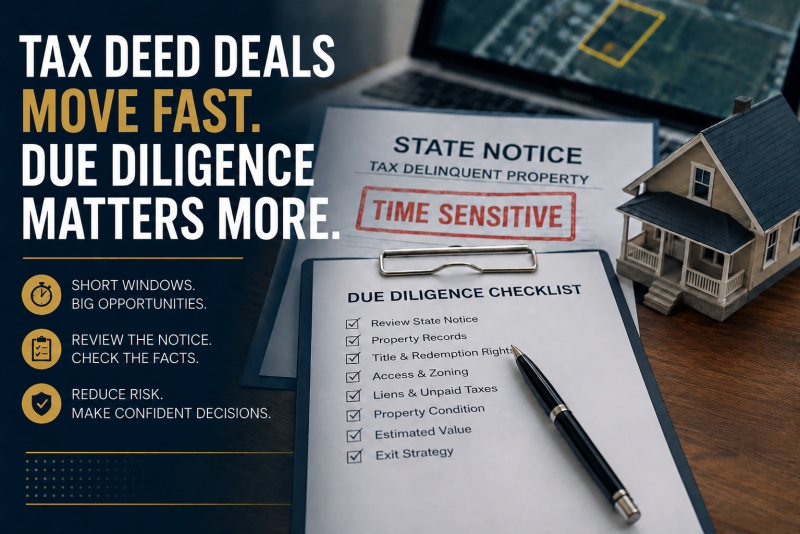
Start with the state notice
The state notice is one of the first documents investors should review.
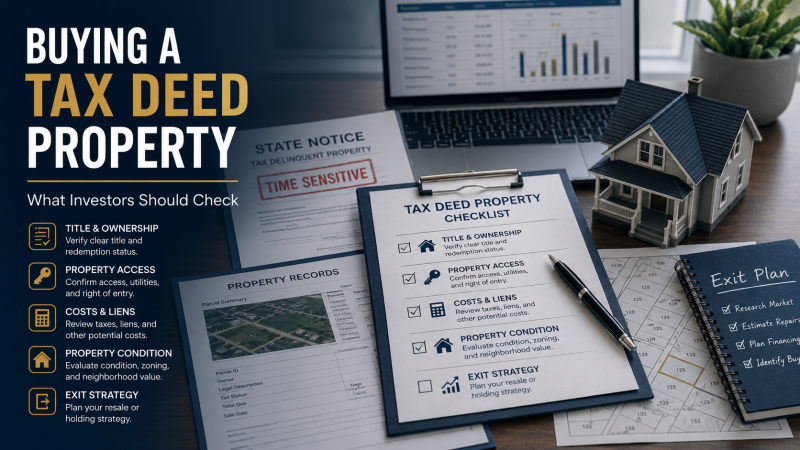
It can help confirm the property reference, quoted amount, payment requirements, and other details connected to the opportunity. Investors should read it carefully and check that the property matches their intended strategy.
A short payment or review window means investors need to move efficiently. However, they should still take time to understand what the notice says before acting.
Check the property records
After reviewing the state notice, investors should check public property records.
This may include parcel information, ownership history, tax details, land size, property use, assessed value, and nearby sales where available.
Property records can help investors confirm whether the opportunity matches the basic information they have received. They can also highlight issues that need further review.
Review title and redemption matters
Title and redemption issues matter in tax deed investing.
A tax deed opportunity may not carry the same title position as a normal retail property purchase. In some cases, redemption rights, quiet title work, or other legal steps may affect the investor’s plan.
Investors should not guess on legal matters. If title, redemption, or ownership questions arise, they should speak with a qualified attorney before moving forward.
Confirm access and road frontage
Access can make or break a property opportunity.
A parcel may look attractive on paper, but it still needs practical access. Investors should check whether the property touches a public road, has legal access, or may require an easement.
Landlocked parcels, unclear driveway access, blocked routes, or shared access issues can affect value and resale options.
Look at zoning and possible use
Zoning controls what an investor may be able to do with a property.
Before buying, investors should check whether the property use fits their plan. A parcel intended for development may not work if zoning, lot size, setbacks, flood zones, utilities, or local rules create limits.
A strong investment plan starts with a clear use case.
Review condition and inspection limits
Some tax deed properties may have limited inspection access.
Investors may need to rely on public records, maps, exterior review, photos, available notices, and local research. If a structure is involved, condition risk can become a major factor.
Repairs, demolition, code issues, unsafe structures, overgrowth, and unknown occupancy can all affect the final cost.
Check unpaid costs and future expenses
The quote price is only one part of the investment.
Investors should also think about unpaid taxes, liens, assessments, legal costs, title work, insurance, utilities, cleanup, holding costs, resale costs, and possible repair costs.
A deal that looks strong at first may become weak once the investor adds the full cost picture.
Compare the estimated value carefully
Estimated value should be treated as a guide, not a guarantee.
Investors should review recent sales, nearby listings, property condition, location, access, demand, and likely buyer interest. They should also consider whether the property needs legal work before resale.
A realistic value range helps investors avoid relying on an inflated number.
Know the exit plan before moving forward
Every investor should know what they plan to do with the property before they act.
Possible exit plans may include resale, land holding, development, rental use, wholesale strategy, or long-term redevelopment. Each plan carries different risks and costs.
If the exit plan is unclear, the investor may not be ready to proceed.
Understand the purchase and administration process
50 East LLC does not collect purchase payments from investors.
When an investor chooses to proceed through the Buy Now form, the enquiry goes directly to The Copeland Law Office, LLC. The Copeland Law Office, LLC oversees the transaction and handles all purchase payments.
This structure helps keep the purchase and administration process separate from the initial opportunity review.
Investors should still complete their own due diligence, seek legal guidance where needed, and make an independent decision before moving forward.
FAQs About Buying a Tax Deed Property
What should investors check first before buying a tax deed property?
Investors should start by reviewing the state notice, property records, parcel details, quoted amount, payment requirements, and whether the opportunity matches their investment strategy.
Does 50 East LLC collect purchase payments?
No. If an investor chooses to proceed through the Buy Now form, the enquiry goes directly to The Copeland Law Office, LLC. The Copeland Law Office, LLC oversees the transaction and handles all purchase payments.
Why do title and redemption matters need legal review?
Tax deed properties can involve title issues, redemption rights, or legal steps that differ from normal property purchases. Investors should speak with a qualified attorney if legal questions arise.
Is the quote price the full cost of buying a tax deed property?
Not always. Investors should also consider legal costs, title work, holding costs, unpaid taxes, liens, assessments, repairs, cleanup, resale costs, and other expenses that may affect the investment.
Are tax deed properties suitable for every buyer?
No. Tax deed properties often suit experienced investors, cash buyers, land buyers, developers, builders, wholesalers, and real estate professionals who understand distressed property risk. They may not suit retail buyers looking for a simple property purchase.
Why does the exit plan matter?
The exit plan helps investors decide whether the property fits their goals. Resale, development, rental use, land holding, and redevelopment all require different checks, costs, and timelines.
Final thought
A tax deed opportunity can move quickly, but a fast decision still needs a clear process.
Investors should review the state notice, check the property records, understand title and redemption issues, confirm access, review costs, and know the exit plan before moving forward.
If you can review distressed property opportunities quickly and complete your own due diligence, request tax deed opportunity updates from 50 East LLC.