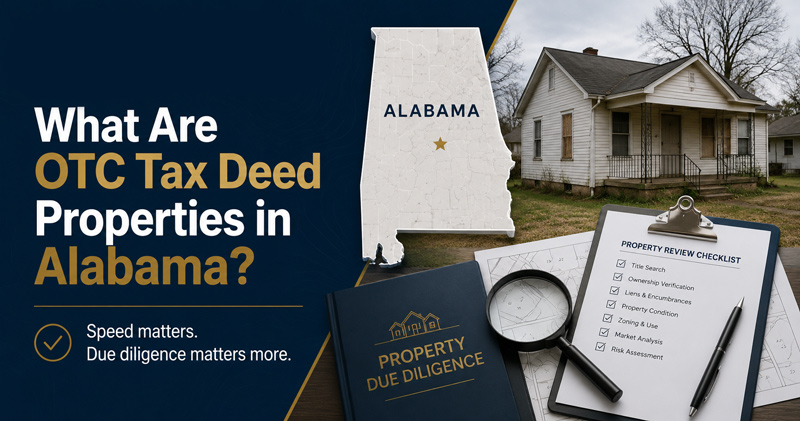

Clear title tax deeds matter because title position can affect resale, financing, development, insurance, legal costs, and the investor’s exit plan.
Tax deed investing can involve opportunities that look attractive at first. The quote price may be lower than the estimated property value, and the review window may be short.
However, investors should not focus on price alone.
Title position is one of the most important parts of a tax deed property review. If the title position is unclear, it can affect resale, financing, development, insurance, legal costs, and the investor’s exit plan.
At 50 East LLC, we identify and review selected tax deed and distressed property opportunities. When an investor provides their information and the opportunity appears suitable, we send the actual state notice for review.
If the investor chooses to proceed through the Buy Now form, the enquiry goes directly to The Copeland Law Office, LLC. The Copeland Law Office, LLC oversees the transaction and handles all purchase payments.
What does clear title mean?
Clear title generally means that ownership can be shown without unresolved claims, liens, disputes, or legal issues that could challenge the buyer’s rights to the property.
In a normal property sale, buyers often expect title checks, title insurance, closing support, and standard documents to reduce title risk. Tax deed properties can work differently.
A tax deed or state notice may give investors access to a property opportunity, but it does not always mean the title is clear or ready for resale.
That is why investors need to understand the title position before they make a decision.
Why title matters in tax deed investing
Title matters because it affects what an investor can do with the property after purchase.
If title issues remain, the investor may face delays, extra legal costs, buyer objections, financing problems, or resale limits. In some cases, a future buyer, lender, or title company may require further legal steps before the property can move through a standard sale.
This does not mean every tax deed opportunity should be avoided. It means investors need to review title risk as part of the deal.
A strong opportunity is not only about the quote price. It also depends on whether the investor understands the legal and practical steps that may come after purchase.
Alabama tax deed properties and clear title
Investors should treat Alabama tax deed opportunities with care.
The Alabama Department of Revenue states that neither an assignment nor a tax deed gives the holder clear title to the parcel. It also advises potential buyers to consult a competent attorney before purchasing tax delinquent property.
This point is important for investors. A tax deed opportunity may still require legal review, title work, or other steps before the investor can resell, finance, develop, or confidently hold the property.
Redemption rights can affect the investor’s plan
Redemption is another key issue in tax deed investing.
The Alabama Department of Revenue explains that a property owner may redeem tax delinquent property within three years of sale by paying the required taxes, interest, fees, and penalties.
Investors should understand whether redemption rights may still apply to the property they are reviewing. If redemption is possible, it may affect timing, risk, resale strategy, and the investor’s overall plan.
Because redemption rules can be legal and fact-specific, investors should seek legal guidance when they need advice on their position.
What is quiet title?
Quiet title is a legal process used to resolve title questions, competing claims, or ownership uncertainty.
In tax deed investing, quiet title may be relevant when an investor wants to improve the title position before resale, financing, or development. A quiet title action may help confirm ownership and reduce uncertainty around competing claims.
The Birmingham Land Bank Authority describes quiet title as a process used to clear back taxes, municipal assessments, and other outstanding claims so a buyer can obtain full ownership through its programme.
Not every situation is the same. Investors should speak with a qualified attorney to understand whether quiet title or another legal step may be needed.
What investors should review
Before moving forward with a tax deed property, investors should review the title position carefully.
Key checks may include:
- The state notice
- Parcel and tax records
- Ownership history
- Redemption status
- Existing liens or assessments
- Prior tax sale information
- Recorded documents
- Access and boundary issues
- Legal steps that may be needed
- Whether the property can support the planned exit strategy
These checks help the investor understand whether the opportunity fits their risk level and investment plan.
Why legal guidance matters
Tax deed investing can involve legal issues that differ from a standard property purchase.
An investor may need to understand redemption rights, quiet title, title defects, liens, competing claims, or the steps required before resale. These issues can affect the value of the opportunity and the investor’s ability to complete their plan.
50 East LLC does not replace legal advice. Investors should consult a qualified attorney when they need advice about title, redemption, purchase documents, or post-purchase steps.
Purchase and administration process
50 East LLC does not collect purchase payments from investors.
When an investor chooses to proceed through To Purchase / Next Steps, the enquiry goes directly to The Copeland Law Office, LLC. The Copeland Law Office, LLC oversees the transaction and handles all purchase payments.
This structure keeps the opportunity review separate from the purchase and administration process.
Investors should still complete their own due diligence, review the state notice carefully, and seek legal guidance where needed before moving forward.
FAQs About Clear Title and Tax Deed Investing
Does a tax deed give clear title?
Not always. In Alabama, the Department of Revenue states that neither an assignment nor a tax deed gives the holder clear title to the parcel. Investors should review the title position and seek legal guidance where needed.
Why does clear title matter to investors?
Clear title matters because it can affect resale, financing, development, insurance, buyer confidence, legal costs, and the investor’s exit plan.
What are redemption rights?
Redemption rights may allow a previous owner or eligible party to redeem the property by paying required taxes, interest, fees, and penalties within a set period. Investors should check whether redemption may still apply.
What is quiet title?
Quiet title is a legal process used to resolve ownership uncertainty, competing claims, or title issues. Investors may need legal advice to understand whether quiet title is relevant to a specific tax deed property.
Does 50 East LLC collect purchase payments?
No. If an investor chooses to proceed through To Purchase / Next Steps, the enquiry goes directly to The Copeland Law Office, LLC. The Copeland Law Office, LLC oversees the transaction and handles all purchase payments.
Should investors get legal advice before buying a tax deed property?
Yes, where legal questions exist. Tax deed properties can involve title, redemption, lien, and ownership issues. Investors should consult a qualified attorney before moving forward when they need legal guidance.
Final thought
A tax deed opportunity is only as strong as the investor’s understanding of the title position behind it.
Price may create interest, but title review helps shape the real decision. Investors should review the state notice, understand redemption risk, check public records, consider legal steps, and seek professional guidance before moving forward.
If you can review distressed property opportunities carefully and complete your own due diligence, request tax deed opportunity updates from 50 East LLC.
Investors should also review our guide on what to check before buying a tax deed property before moving forward.